
When Focus Feels Out of Reach: Looking Beneath ADHD-Like Behaviours in Children
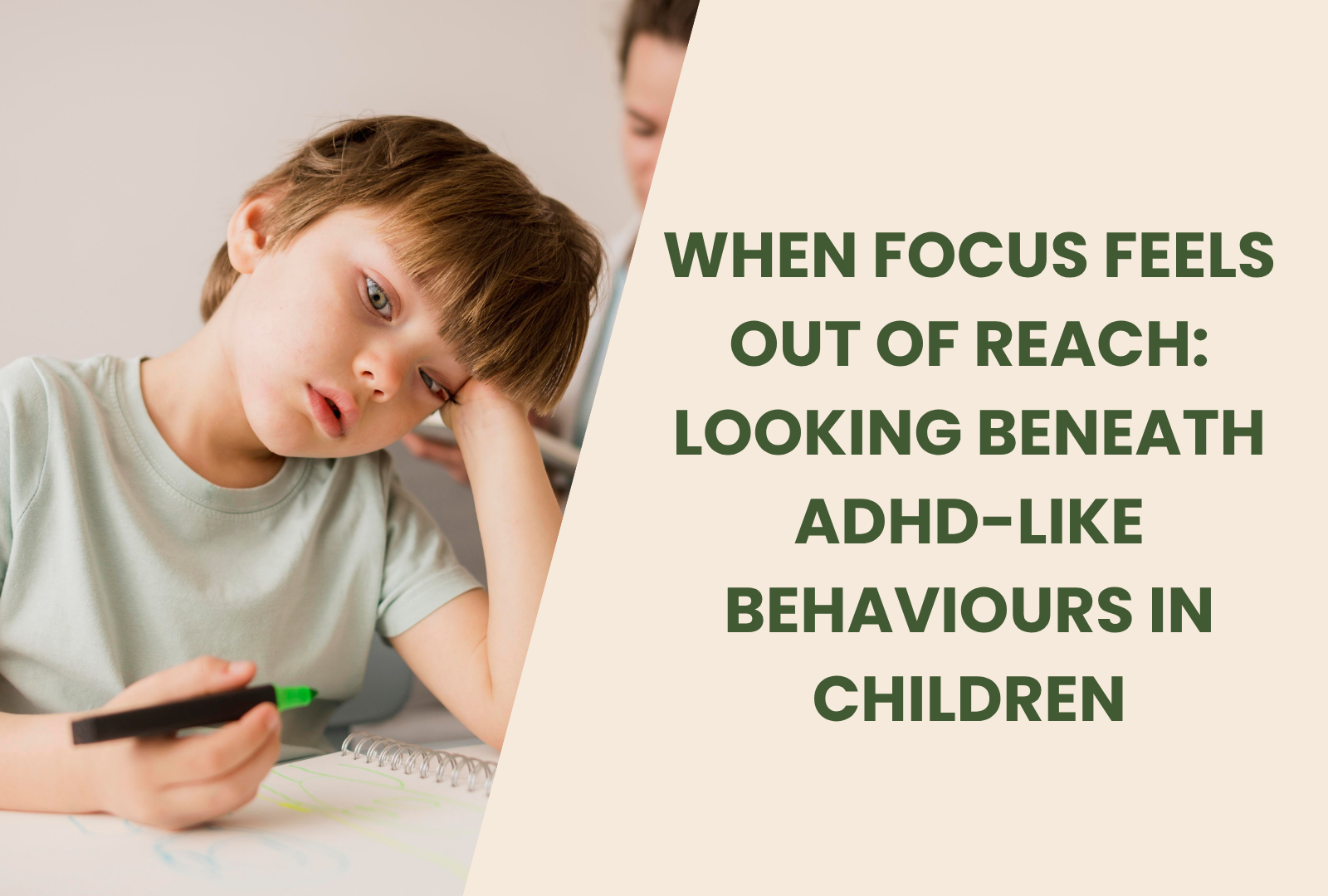
Many parents in Singapore come to us feeling worried and unsure.
Their child is constantly moving, unable to sit still, easily overwhelmed in noisy environments, and struggling to focus or follow instructions. Words like “suspected ADHD” begin to surface — along with concerns about how their child will cope in school.
On the surface, it can look like a behaviour issue.
But often, it reflects something happening underneath.
At Neural Connections, we look at how well the brain and body are working together — because before a child can focus, listen, and learn, their system needs to feel organised, regulated, and safe.
Looking Beneath the Surface
Everything your child does is shaped by how their brain receives and makes sense of sensory information.
This includes input from the environment — sound, movement, and visual stimuli — as well as input from within the body, like body position, balance, and movement.
When this sensory processing is not well integrated, the child’s system works much harder just to stay organised.
This can look like:
Constant movement or fidgeting
Overwhelm in busy or noisy environments
Difficulty sustaining attention
Challenges with listening and following instructions
Not because they are choosing to behave this way, but because their brain is trying to manage and organise sensory input.
Why Foundations Matter

Focus is not just a cognitive skill.
It is built on sensory and physical foundations.
When a child develops stronger body awareness and sensory integration, their system becomes more efficient.
They no longer need to use so much energy just to manage their body — freeing up capacity for attention, learning, and participation.
When the System is Overloaded
If the body is already working inefficiently, everyday environments can quickly become overwhelming.
In classrooms — where there is noise, visual input, movement, and expectations to sit still and perform — the demand on the child’s system increases significantly.
From the outside, this can look like ADHD-related behaviours.
But internally, the child may be experiencing stress from trying to cope.
When a child does not feel in control of their body, and lacks a sense of safety within their system, regulation becomes much harder.
Supporting What Sits Underneath
Rather than working only on behaviours or outcomes, we focus on the foundations that support them.
This includes:
Strengthening the brain–body connection
Supporting sensory integration and processing
Addressing retained reflex patterns that may still be active and affecting movement,
Coordination, and regulation
Building postural and core stability
Supporting a greater sense of safety within the nervous system
As these underlying systems become more organised, many families notice improvements in focus, regulation, and participation.
A Different Way to Understand Your Child

If your child struggles to sit still, focus, or cope in certain environments, it doesn’t always mean they are not trying.
What can look like ADHD or behavioural challenges is often a child trying to manage sensory input from their body and environment.
When we support what sits underneath, the surface behaviours often begin to change.
What to expect from a Discovery Call:
Understand what may be underlying your child’s challenges
Ask questions in a no-pressure setting
Explore whether this approach is the right fit