
Why Your Child Remembers Experiences But Forgets Worksheets
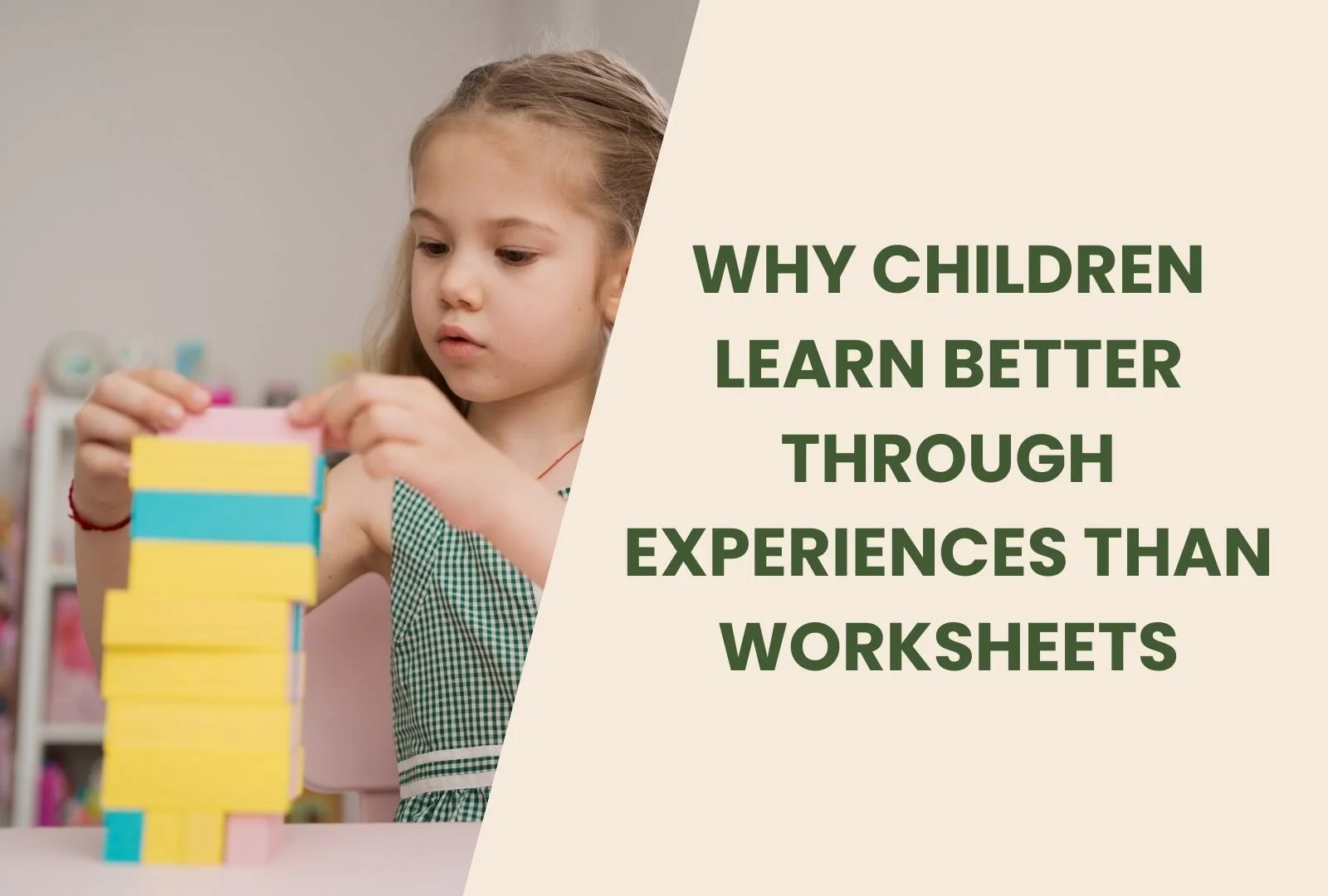
Child engaged in hands-on sensory learning activity.
Many parents notice something interesting.
Their child may forget what they practised on a worksheet…but clearly remember a hands-on activity, a group project, or something they experienced with friends.
This is not surprising when we understand how children learn best.
Children’s brains are designed to learn through movement, sensory experiences, and interaction. When learning involves the body as well as the mind, it strengthens the brain-body connection, helping information stay longer in memory.
When children are seeing, hearing, touching, moving, and talking, many parts of the brain are activated at the same time. This type of hands-on learning for children creates richer neural pathways than passive learning alone.
In simple terms:
The more senses involved, the more likely the learning will stick.

How Sensory Integration Supports Learning
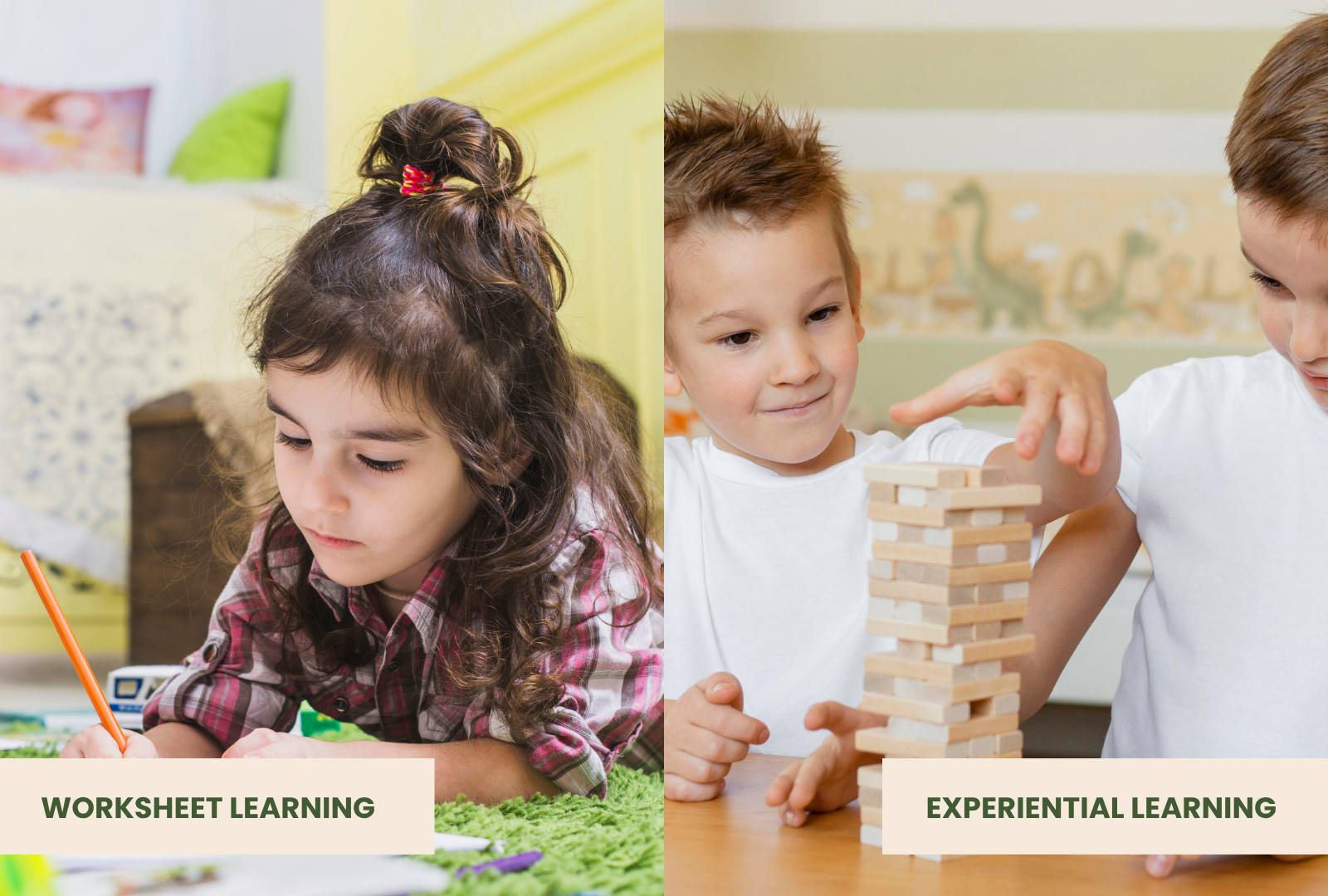
The more senses involved in learning, the stronger the memory pathways in the brain.
At Neural Connections, we often look at learning through the lens of sensory integration and neurodevelopmental foundations.
For children to focus, remember, and apply new information, their nervous system needs strong underlying foundations, including:
Sensory integration
Body awareness and movement coordination
Attention and energy regulation
Integration of early reflex patterns
When retained reflexes or sensory processing challenges are present, children may need to work much harder than their peers just to keep up.
They may appear:
Easily distracted
Clumsy or uncoordinated
Overwhelmed in busy environments
Frustrated during learning tasks
In these situations, the difficulty may not be about intelligence or motivation. Sometimes the real issue lies in the developmental foundations for learning.
Strengthening these brain-body foundations can support:
Attention and focus
Coordination and balance
Emotional regulation
Learning readiness
Why Social and Active Learning Helps Memory
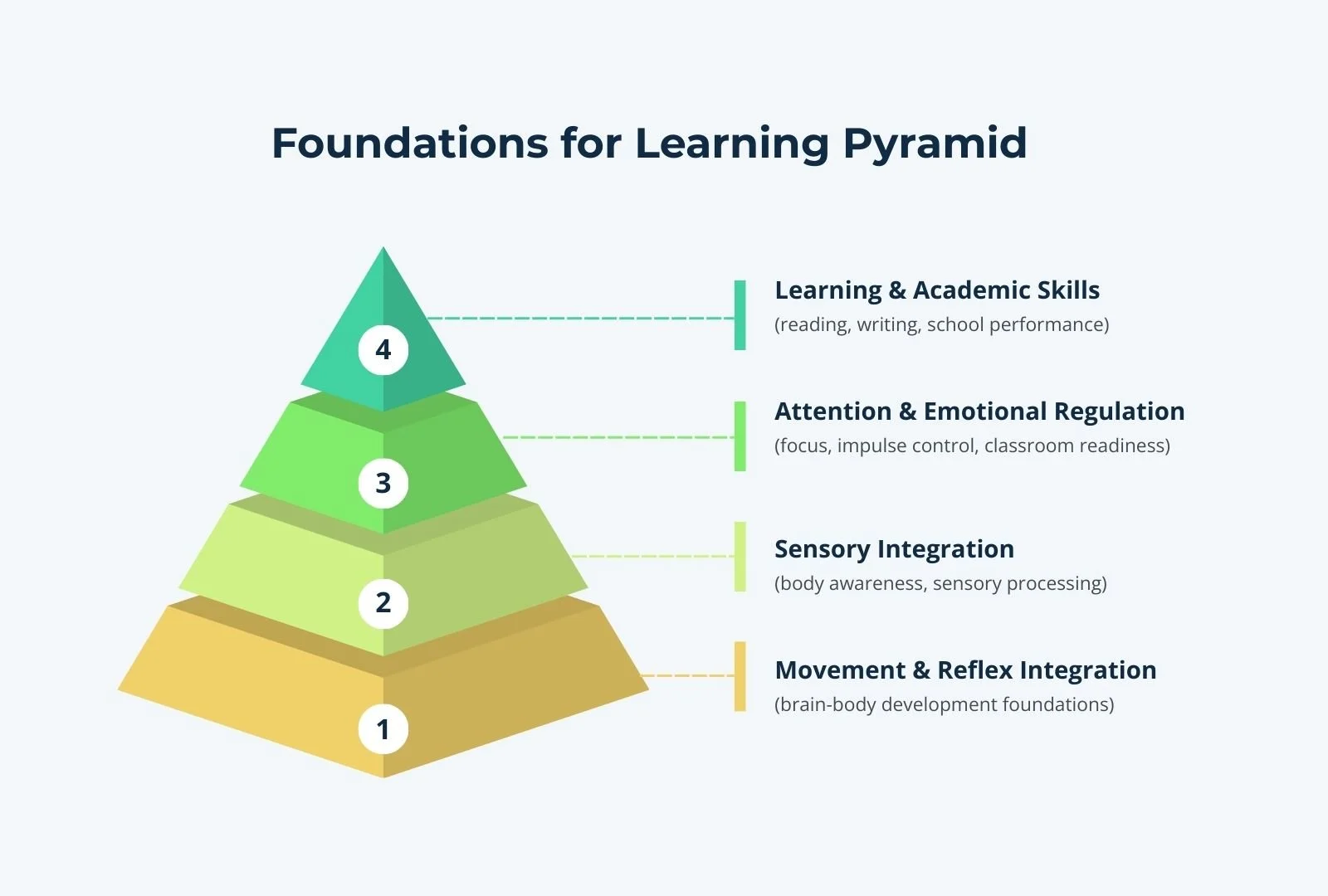
Strong brain-body foundations support attention, behaviour, and learning.
Learning experiences that involve movement and social interaction are especially powerful.
When children learn through activities with partners or small groups, they are:
Talking
Listening
Moving
Reacting emotionally
Solving problems together
These experiences combine sensory input, movement, and emotion, which helps the brain build stronger memories.
This is why children often remember:
Science experiments
Building projects
Games or role-play
Group activities
long after they forget what they practised on a worksheet.
Where Worksheets Fit In
Worksheets and drills still have a role in learning.
They can be useful for:
Practising a skill
Revising what was learned
Encouraging independent work
Checking whether a concept was understood
However, worksheets work best after children have had a meaningful learning experience first.
Experience builds understanding.
Practice strengthens it.
A balanced learning approach often looks like this:
Experience first – movement, sensory learning, interaction
Understanding next – discussion and reflection
Practice afterwards – worksheets or drills to reinforce learning
Some Signs These Foundations May Need Support
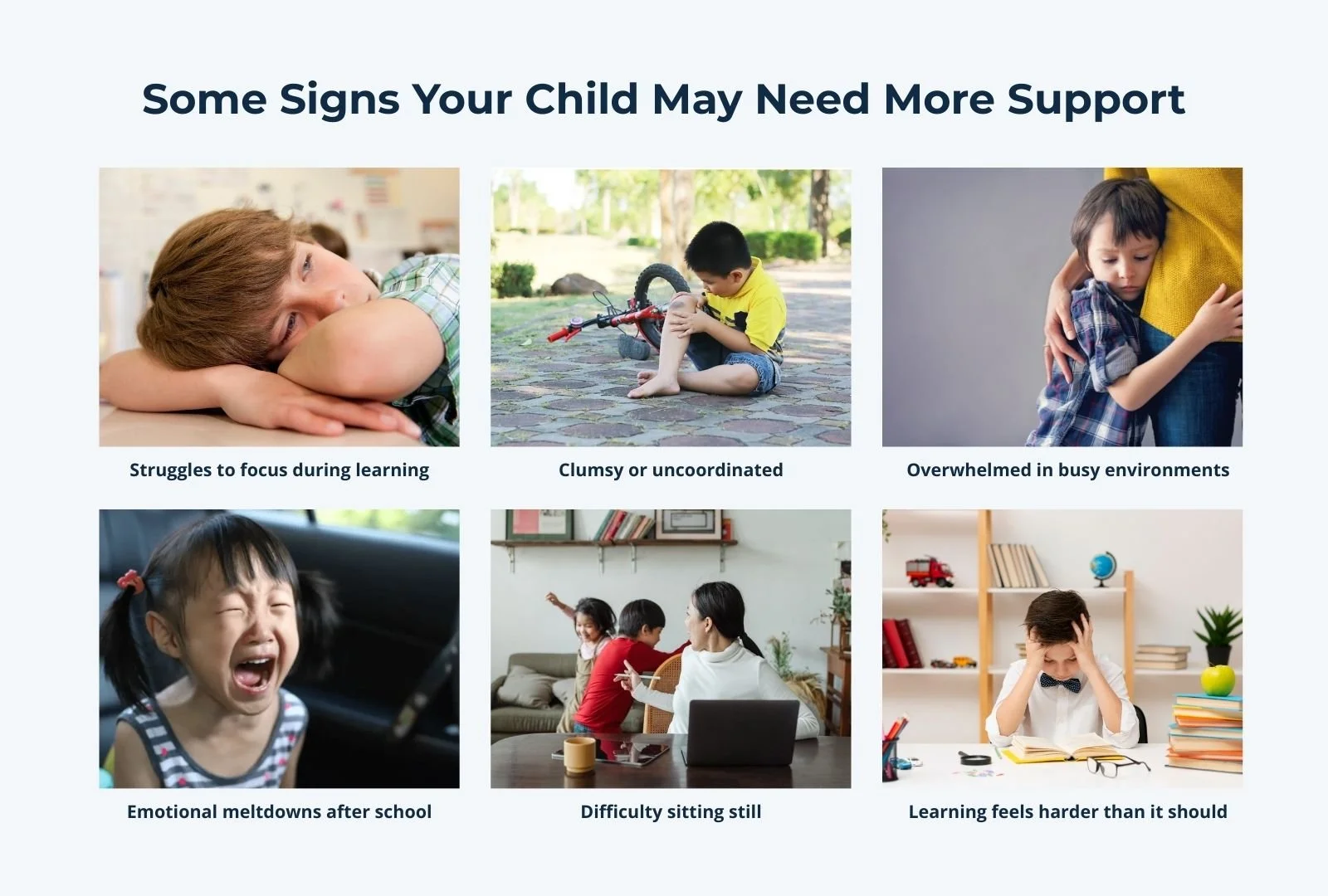
Sometimes these signs are connected to sensory integration or retained reflex patterns.
Parents sometimes come to us when they notice their child:
Struggles to stay focused during learning
Finds sitting still very difficult
Appears clumsy or uncoordinated
Becomes overwhelmed in busy environments
Melts down after school even if school seems “fine”
Works very hard but learning still feels difficult
These signs can sometimes be connected to sensory integration challenges or retained reflex patterns, which affect the brain-body systems that support learning and regulation.
Why Looking At Foundations Early Matters
When children have strong developmental foundations, learning tends to feel more natural.
When these foundations are still developing, children may rely on extra effort, compensation, or frustration just to keep up.
Addressing the root foundations of development early can help children feel more confident in their bodies, emotions, and learning.
Child Development Support in Singapore
At Neural Connections Singapore, we support children by looking at the root foundations of development rather than focusing only on symptoms.
Our approach combines insights from:
Sensory integration
Reflex integration
Movement development
Brain-body learning
to help children build stronger foundations for learning, behaviour regulation, and confidence.
Wondering If These Foundations May Be Affecting Your Child?
Some parents notice their child:
Struggles with focus or attention
Finds coordination or balance challenging
Becomes easily overwhelmed
Works very hard but learning still feels difficult
Sometimes these challenges are connected to underlying sensory integration or retained reflex patterns, which affect the brain-body systems that support learning and regulation.
At Neural Connections, we look beyond behaviour and academics to understand the foundations underneath learning.
If you'd like to explore this further, you're welcome to book a complimentary Discovery Call.
This is simply a relaxed conversation where we can:
Hear your concerns
Share what we look for in development
Help you decide whether an assessment or next step would be helpful
No pressure — just a conversation to support your child.